nix-appimage: When musl is not enough
The static musl recipe from GitHub Releases: A poor man’s Nix binary cache works because a CLI’s runtime is glibc plus a few libraries. Programs that depend on GTK or similar large, complicated libraries don’t compile well to static binaries.
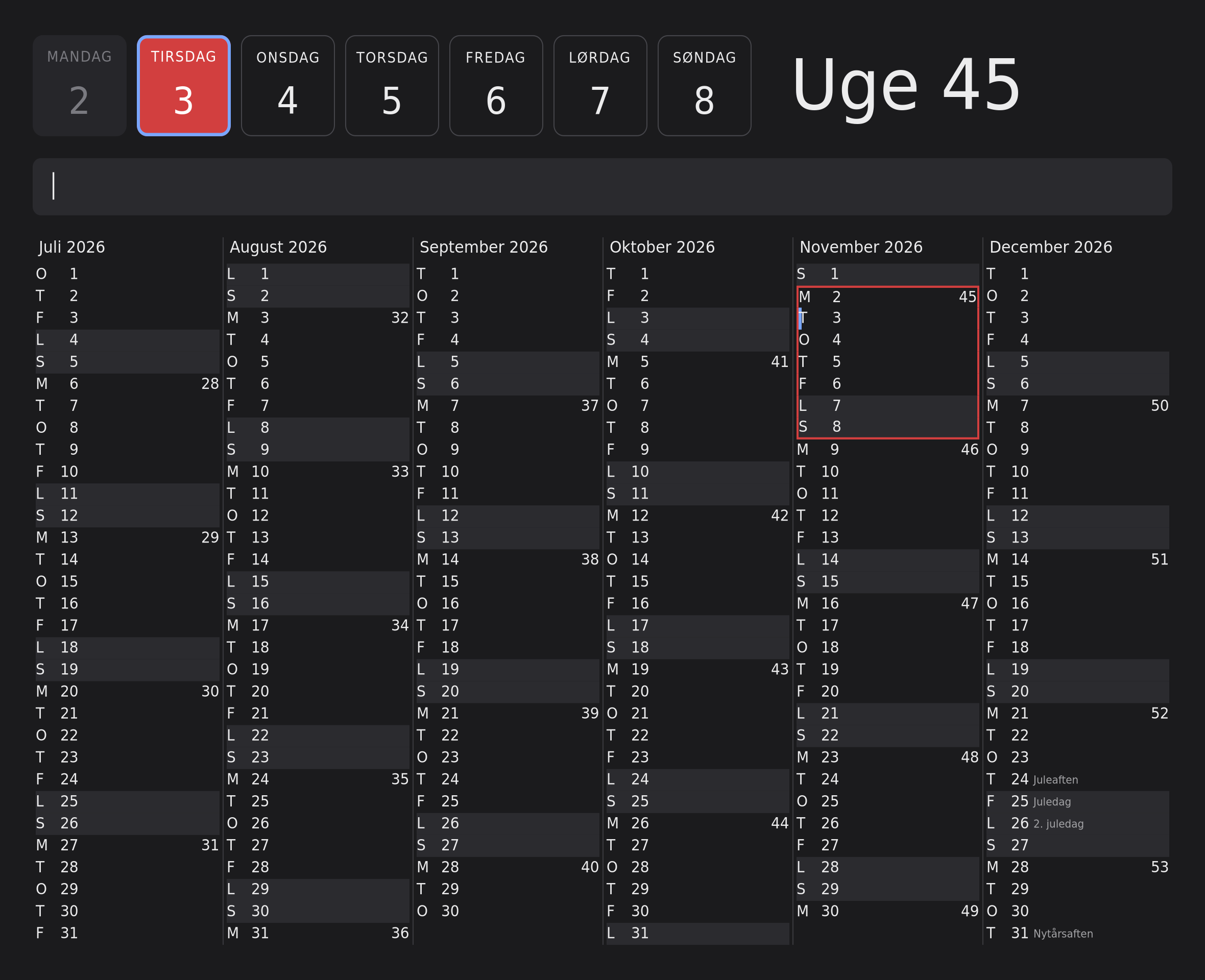
glimt is such a program. Its binary is a thin wrapper around GTK and Wayland. The program is tiny; the problem is everything the loader pulls in and everything GTK opens after it starts:
$ readelf -d .glimt-wrapped | grep NEEDED
 0x0001 (NEEDED) Shared library: [libgtk4-layer-shell.so.0]
 0x0001 (NEEDED) Shared library: [libgtk-4.so.1]
 0x0001 (NEEDED) Shared library: [libgobject-2.0.so.0]
 0x0001 (NEEDED) Shared library: [libglib-2.0.so.0]
 0x0001 (NEEDED) Shared library: [libgcc_s.so.1]
 0x0001 (NEEDED) Shared library: [libm.so.6]
 0x0001 (NEEDED) Shared library: [libc.so.6]
 0x0001 (NEEDED) Shared library: [ld-linux-x86-64.so.2]
This list is even optimized by removing GStreamer, which pulls in libgstplay-1.0.so.0.
You can rebuild GTK, glib, pango, cairo, gdk-pixbuf and fontconfig with static linking, but it
wouldn’t work out well. GTK opens gdk-pixbuf loaders and GIO modules with dlopen (where dl means
“dynamic linking”), reads GSettings schemas from XDG_DATA_DIRS, and asks fontconfig for fonts. A
static ELF contains none of those files, and the dynamic loader cannot dlopen a library that was
linked into the executable.
tl;dr 
- A GTK dashboard has a 897 MiB runtime closure, and most of the program is data and plugins that the loader and GTK open by path.
- An AppImage keeps the dynamic links and puts the whole closure in one file: 353 MiB for the first build, 110 MiB after removing GTK’s GStreamer media backend, and 20 MiB after pruning the rest of the closure.
- The release still uses GitHub Releases, but this time the artifact is an AppImage rather than a static tarball.
The bundle 
An AppImage is an ELF runtime concatenated with a squashfs. The runtime mounts the
squashfs and runs AppRun; the squashfs contains the program and the files it expects to find at
absolute paths. nix-appimage builds one from a Nix package:
$ nix bundle --bundler github:ralismark/nix-appimage .#glimt
$ ls -lhL glimt.AppImage
-r-xr-xr-x 1 root root 353M Jan  1  1970 glimt.AppImage
$ ./glimt.AppImage --version
glimt 0.2.1
nix-appimage uses user namespaces and a chroot to make the bundled closure appear at /nix/store.
That detail is what keeps the wrapper working: the wrapper sets GDK_PIXBUF_MODULE_FILE,
GIO_EXTRA_MODULES and XDG_DATA_DIRS to absolute store paths, and those paths have to resolve
inside the bundle. The executable itself stays dynamically linked.
The cost is that the bundle needs user namespaces on the host, and it cannot bundle a GPU driver. OpenGL applications on a non-NixOS distribution may still need nixGL.
The sizes 
The first AppImage was 353 MiB. nix path-info -Sh put the source build’s runtime closure at
897 MiB, and GTK alone accounted for 874 MiB of it.
The largest branch was GStreamer. gst-plugins-bad has an 819 MiB closure, because GTK’s media
backend pulls in the usual collection of codecs, PipeWire, OpenAL and ffmpeg. The dashboard plays no
media. Turning the backend off in GTK is one meson flag:
# nix/appimage.nix
gtk4 = prev.gtk4.overrideAttrs (old: {
  mesonFlags = (old.mesonFlags or [ ]) ++ [ "-Dmedia-gstreamer=disabled" ];
  buildInputs = builtins.filter (
    p: !(builtins.elem (p.pname or "") [ "gst-plugins-base" "gst-plugins-bad" ])
  ) old.buildInputs;
});
gtk4-layer-shell has to be rebuilt against that GTK, or its own reference drags the full GTK back
in next to the lean one. With that done, the gtk4 closure dropped from 874 MiB to 271 MiB, and the
AppImage dropped to 110 MiB:
$ ls -lh dist/glimt-v0.2.1-x86_64.AppImage
-r-xr-xr-x 1 sshine users 110M Nov  4 00:56 dist/glimt-v0.2.1-x86_64.AppImage
The remaining closure is dominated by other branches that a calendar does not need. tinysparql
(tracker) has a 167 MiB closure and feeds the file chooser’s recent-file search. cups has a
119 MiB closure and exists for printing. Both can be disabled with trackerSupport = false and
cupsSupport = false if the application does not use them. The dashboard uses neither, so I
turned them off. That brought the image to 73 MiB.
Let’s get schwifty 
I want to see how much smaller it can get.
After all, I could have just shipped an HTML page of a few kilobytes.
GTK’s defaults assume a desktop. The dashboard is a Wayland layer-shell client: it never searches recent files, prints, uses Vulkan, or serves a Broadway session. Turning those off is four flags on the same override:
gtk4 = prev.gtk4.override {
  trackerSupport = false;
  cupsSupport = false;
  vulkanSupport = false;
  broadwaySupport = false;
};
Disabling Vulkan has one catch. nixpkgs adds libdrm to GTK’s build inputs only when Vulkan is
enabled, but the Wayland DMA-BUF path checks for it regardless, so a plain vulkanSupport = false
fails in meson. Adding libdrm back to buildInputs in the overrideAttrs fixes it.
I did not disable the X11 backend yet. nixpkgs builds libepoxy with EGL disabled when x11Support = false, and GTK’s Wayland code includes epoxy/egl.h; making that work means patching libepoxy as
well. The X11 libraries are a few megabytes, and the coupling looked worse than the size.
The wrapper was another source of GTK. wrapGAppsHook4 is graphical by default, which adds
librsvg and gtk3 so that SVG icons and the SVG gdk-pixbuf loader work. The dashboard draws its
own text. Overriding the hook with isGraphical = false removes both:
wrapGAppsHook4 = prev.wrapGAppsHook4.override { isGraphical = false; };
The biggest remaining item, then, is translations. A GNOME closure ships .mo catalogues for every
language for GLib, GTK, GSettings, iso-codes, XKB and gdk-pixbuf. The dashboard’s own strings are
English and the calendar has no translated UI. Perhaps I should add translations. But then again,
I’m the only user of this piece of software. A small helper removes the catalogues from the release
copies:
withoutLocales = package: package.overrideAttrs (old: {
  postInstall = (old.postInstall or "") + ''
    rm -rf "$out/share/locale"
  '';
});
Applying that to a package makes nixpkgs rebuild its dependents against the trimmed copy, but only
if the override happens before GTK is evaluated. The release package set is therefore two
extends: the first trims data, the second overrides GTK and takes prev.gtk4, which now already
points at the trimmed dependencies. libxkbcommon is rebuilt against the trimmed
xkeyboard-config in the first pass for the same reason.
GTK also carries emoji data and GObject introspection typelibs. The typelibs are for language
bindings loading GTK at runtime, but a Rust binary using the C ABI won’t. The emoji resources are
only opened by the emoji chooser. Both go in the same postInstall. The GIR XML stays, because
gtk4-layer-shell scans Gtk-4.0.gir when it generates its own introspection data.
Rust emits a symbol table even in a release build with no debug info, and stdenv’s default strip
flags are -S -p, which remove debug sections but keep .symtab. The binary was 17 MiB, of which
the symbol table was about 3 MiB. Setting stripAllList = [ "bin" ]; on the crate makes the fixup
phase use --strip-all.
Finally, the squashfs was gzip-compressed by default. nix-appimage takes squashfsArgs, so
passing xz with the x86 BCJ filter saves another several megabytes. It costs build time and a
little startup time.
squashfsArgs = [ "-comp" "xz" "-Xbcj" "x86" "-Xdict-size" "100%" ];
Together, those steps took the image from 73 MiB to 37 MiB.
The squashfs pass 
The last pass works on the squashfs rather than on the Nix packages. nix-appimage packs each store
path whole, including files the program never opens. Extracting the image, deleting those files and
re-squashing is simpler than rebuilding glibc or GCC, and the store paths are private to the
AppImage:
offset=$(stat -Lc%s "$runtime")
unsquashfs -offset "$offset" -d tree glimt.AppImage
chmod -R u+w tree

find tree/nix/store -maxdepth 1 -type d -name '*-glibc-*' \
  -exec rm -rf '{}/share/i18n' '{}/share/locale' '{}/lib/gconv' \;

find tree/nix/store -maxdepth 1 -type d -name '*-gcc-*-lib' \
  -exec sh -c 'cd "$1/lib" && find . -maxdepth 1 \
    ! -name "libgcc_s.so*" -delete' _ {} \;

find tree -type f -name '*.so*' -exec strip --strip-unneeded {} +

mksquashfs tree out.AppImage -all-root -offset "$offset" \
  -comp xz -Xbcj x86 -Xdict-size 100%
dd if="$runtime" of=out.AppImage conv=notrunc
The GCC runtime keeps only libgcc_s; libstdc++ goes once libtiff’s C++ bindings and graphite2’s
test tool are removed. glibc keeps its C.UTF-8 locale in lib/locale, but the locale sources,
translation catalogues and gconv modules go. Documentation, manual pages and GObject typelibs go
too. Finally, every shared object is stripped of .symtab, which stdenv leaves behind. That took
the image from 37 MiB to 29 MiB.
Removing X11 
The X11 libraries were the next branch. GTK itself can be built with x11Support = false, but
nixpkgs ties several dependencies to the same switch. libglvnd gets a --disable-x11 build, so
it still provides EGL without GLX. libepoxy is the awkward one: nixpkgs disables EGL when X11 is
off, but GTK’s Wayland backend includes epoxy/egl.h. The release builds a small EGL-only libepoxy
and points LIBGL_PATH at the EGL-only libglvnd.
cairo, pango and libxkbcommon are rebuilt without X11 as well. libxkbcommon also drops its
registry, tools and docs; the registry only pulls in libxml2 for xkbcli. The X11-free packages are
passed to GTK explicitly rather than overriding cairo and pango globally, because gtk3 and gjs are
still in the Rust toolchain’s build closure and need the X11 versions.
That removed the X11 branch, but on its own it was worth only a couple of megabytes. The rest came from dependencies that were still in the closure for other reasons.
Trimming the dependency graph 
The remaining dependency trims are smaller. GTK no longer gets iso-codes. libtiff is rebuilt
without WebP, LERC, libdeflate, xz and zstd; GTK only needs the TIFF C API. freetype is rebuilt
without brotli and bzip2, and harfbuzz, fontconfig and cairo point at that copy. A few
RPATH-only dependencies go in the post-processing pass.
The result is 20 MiB:
$ ls -lh dist/glimt-v0.2.1-x86_64.AppImage
-r-xr-xr-x 1 sshine users 20M Nov  6 04:00 dist/glimt-v0.2.1-x86_64.AppImage
The current image is about a seventeenth of the first build.
What’s left 
The largest remaining pieces are gtk4 at about 13 MiB, the Rust binary at about 14 MiB, glibc
at about 6 MiB and glib at about 5 MiB. The toolkit and the language runtime dominate now.
Further reductions need a different kind of change. LTO across the Rust workspace could shrink the binary, and patching GTK to drop its TIFF, JPEG and PNG loaders would remove a few more libraries. Both cost build time and maintenance, and neither is a flag on an existing package.
Alternatives to nix-appimage

nix-bundle makes the same single-file idea without AppImage: the executable extracts the
closure to a temporary directory and runs it through namespaces. It starts slower and leaves the
extraction to the first run, but it avoids the AppImage runtime.
Flatpak and Snap are the distribution-level answers. Both give you a sandbox, an update channel and desktop integration, at the cost of another daemon and a build pipeline that knows about runtimes and manifests. For a program that already has a Nix package and a release workflow, an AppImage is a much smaller step.
A plain tarball with the libraries beside the binary is the low-tech version. patchelf can rewrite
the rpath to $ORIGIN/lib, but that only fixes the ELF search path. GTK’s data files, schemas and
loaders still need paths, and every one of them has to be rewritten or pointed at by a wrapper. At
that point the tarball has most of an AppImage and none of the packaging.
Static linking is the option that sounds best and is the least useful here. The dashboard is a GTK application; the toolkit is the product, not an implementation detail that can be erased.
Releasing it 
The release pattern is the one from the previous post. just dist still builds the two
static musl clients and their checksums, and now calls just appimage for the dashboard:
appimage version:
    nix build .#glimt-appimage
    name="glimt-{{version}}-$(uname -m).AppImage"; \
    cp -fL result "dist/$name"; \
    ( cd dist && sha256sum "$name" > "$name.sha256" )
The workflow uploads the AppImage beside the tarballs:
files: |
  dist/*.tar.gz
  dist/*.tar.gz.sha256
  dist/*.AppImage
  dist/*.AppImage.sha256
Consumers who want the release instead of a source build get glimt-bin, a fetchurl and a
makeWrapper around the AppImage, plus the static glimtctl-bin. The flake omits both on systems
with no matching artifact, the same way the CLI release does.
On NixOS I kept the source build. This machine’s system closure already contains gtk4 and
gst-plugins-bad, so the source-built dashboard adds about 20 MiB, while the AppImage adds 20 MiB
and a second copy of GTK. The release is for the machines that do not have Nix, GTK or a matching
glibc. On those, one file is the whole installation.